How to Use the UDISE Student Module for Accurate Enrollment and Attendance Tracking
Accurate data about student enrollment and attendance is the backbone of every effective education system. It helps schools identify learning gaps, track progress, and plan better for the future. The UDISE Student Module was designed with this exact purpose — to help schools record, monitor, and analyze student data in a structured, reliable, and transparent way.
With this module, schools can maintain real-time records of every student, ensuring that no child is left unregistered or unaccounted for. It simplifies record-keeping while making educational data more consistent and trustworthy at both local and national levels.
Purpose of the UDISE Student Module
The UDISE Student Module serves as a digital solution for managing student-related data efficiently. Its main goal is to ensure that information about every learner — from enrollment to attendance — is available, verified, and up-to-date.
This allows schools, districts, and education departments to:
- Identify areas with low enrollment rates
- Monitor attendance and participation patterns
- Prevent data duplication or loss
- Design better student-centered policies and interventions
Accurate use of this module ensures that all statistics reflect the real situation on the ground.
Step-by-Step Guide to Using the UDISE Student Module
1. Logging into the Portal
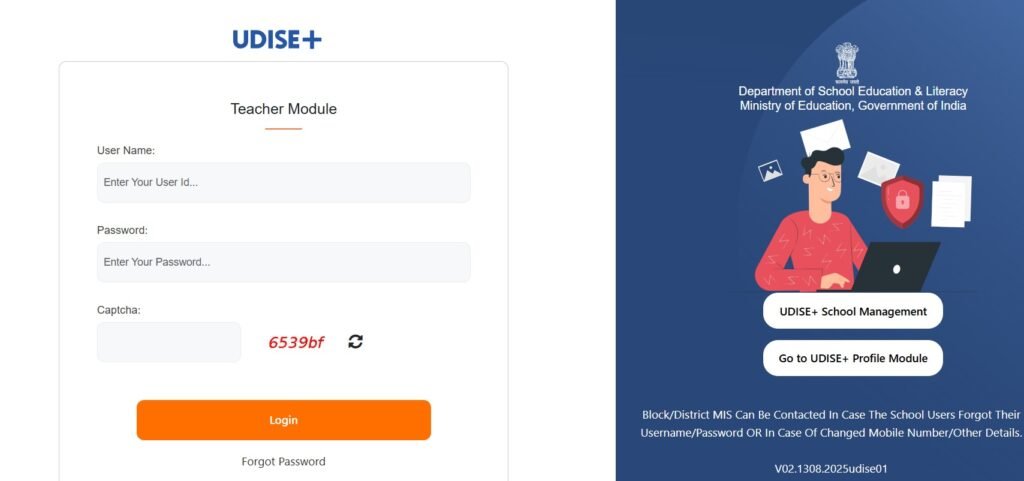
Visit udiseplus.gov.in and log in using your school’s unique UDISE Code and password. After successful login, select the “Student Module” option on the dashboard to access student-related features.
2. Adding New Students
For new admissions, click on “Add Student” and fill in the required details — full name, gender, class, date of birth, and category (General, SC, ST, or OBC). Verify each entry before saving to prevent errors.
If applicable, include Aadhaar details and parental information. Each student will automatically be assigned a unique ID linked to the school’s UDISE Code.
3. Updating Existing Records
For returning students, use the “Update” option to promote them to the next grade or correct existing details such as address or contact information. Always ensure that student data is current and matches your school registers.
4. Recording Attendance Data
The module allows daily or monthly attendance tracking. Schools can record attendance per class and section, helping identify absentees and patterns of irregular attendance. These insights can be used to support students who are at risk of dropping out.
5. Generating Enrollment Reports
Once all data is entered, schools can generate enrollment summaries — categorized by class, gender, and social group. These reports are used for internal planning and are also shared with education authorities for official analysis.
6. Validating and Submitting Data
After completing all entries, click the “Validate” option to check for errors. The system automatically highlights missing or inconsistent fields. Once validation is successful, submit your data for district-level verification.
How the Module Helps in Attendance Tracking
The attendance tracking feature is one of the most valuable functions of the UDISE Student Module. It allows schools to:
- Monitor daily attendance at both class and school levels
- Identify frequently absent students
- Track attendance trends over months or terms
- Compare attendance rates between boys and girls
This data is critical in understanding student engagement and ensuring that children are not silently dropping out of the system.
Benefits of Accurate Enrollment and Attendance Data
- Transparency in Reporting
Verified data helps eliminate discrepancies between school records and government statistics. - Improved Planning
Schools can allocate resources — like classrooms, books, and teachers — more effectively when they have accurate student numbers. - Better Monitoring of Education Schemes
Programs like Samagra Shiksha rely on accurate student data to provide funds and materials where they’re needed most. - Early Detection of Dropouts
By comparing year-to-year data, schools can identify and address dropout risks quickly. - Data-Driven Decision-Making
District and state authorities can design more effective strategies when they have access to verified, school-level information.
Common Mistakes Schools Should Avoid
- Forgetting to update promoted students’ class levels
- Entering duplicate records for the same student
- Leaving blank fields, especially for gender or social category
- Failing to verify attendance totals before submission
- Waiting until the end of the year to enter all data at once
Avoiding these mistakes ensures that your school’s data remains accurate and passes validation smoothly.
Tips for Efficient Data Management
- Assign a trained staff member to handle UDISE data entry.
- Keep digital copies of attendance and enrollment registers.
- Review data weekly instead of waiting for deadlines.
- Use the “Preview Report” option before final submission.
- Always confirm that totals match between online and offline records.
Good data habits save time and help prevent last-minute corrections or rejections.
Why Accurate Tracking Matters
Accurate enrollment and attendance tracking aren’t just administrative tasks — they represent a school’s commitment to accountability and inclusion. The data from the UDISE Student Module directly influences government policies, resource allocation, and even school rankings.
When used properly, the system ensures that every student’s journey is recorded and supported, especially those from vulnerable or marginalized backgrounds.
Conclusion
The UDISE Student Module has made enrollment and attendance tracking simpler, faster, and more reliable. By maintaining accurate records, schools not only meet compliance requirements but also contribute to building a stronger, more transparent education system.
With careful use, this digital tool transforms how schools manage information — turning numbers into insights that drive meaningful action for students across India.