GPS Tracker: The Complete Guide to Smarter Vehicle & Asset Tracking in 2025
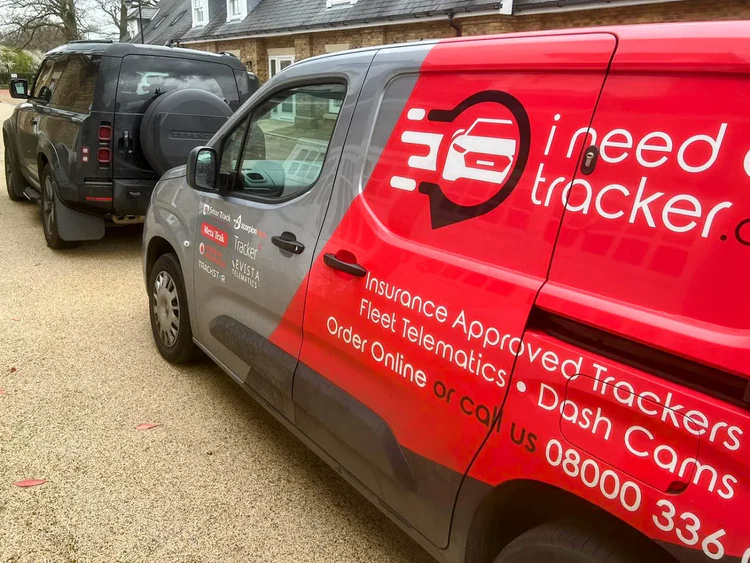
From stolen vehicles recovered within minutes to parents monitoring teen drivers and businesses cutting fleet costs, the GPS tracker has quietly become one of the most transformative personal and commercial security tools of the modern era. Compact, affordable, and increasingly sophisticated, GPS tracking technology has moved far beyond its military origins to become an everyday solution for millions of people around the world.
Whether you are a first-time buyer wondering what GPS tracking actually involves, or an experienced fleet manager looking to upgrade your systems, this guide covers everything — how the technology works, what types are available, the features that matter most, and how to pair a tracker with other security tools for the strongest possible protection.
What Is a GPS Tracker?
A GPS tracker is a small electronic device that uses the Global Positioning System — a network of over 30 satellites orbiting Earth — to determine its precise geographic location. That location data is then transmitted, typically via a cellular network, to a cloud-based server where it can be viewed in real time through a dedicated app or web portal.
Modern trackers are remarkably compact — some are no larger than a matchbox — and can be installed discreetly inside a vehicle, attached magnetically underneath a car, plugged into the OBD-II diagnostic port, or sewn into cargo and luggage. They update location data continuously, providing a live map of wherever the tracked asset is at any given moment.
Beyond simple location reporting, today’s GPS trackers are capable of logging full journey histories, monitoring driving behaviour, triggering alerts based on speed or geography, and even integrating with other security systems for a fully connected protection ecosystem.
How GPS Tracking Technology Works
The process behind GPS tracking involves three interconnected components working together in real time:
The Satellite Network — GPS satellites continuously broadcast time-stamped signals from orbit. A GPS receiver inside the tracker picks up signals from at least four satellites simultaneously and uses the slight time differences between those signals to calculate its exact position through a process called trilateration. This delivers location accuracy typically within 2–5 metres under open sky conditions.
The Cellular Network — Once position is calculated, the tracker transmits that data via a built-in SIM card and mobile network — 4G LTE or 5G in most modern devices — to a remote server. This step is what enables real-time tracking from anywhere in the world, as long as both the device and the viewer have network connectivity.
The Tracking Platform — The server receives and stores location data, making it accessible through a smartphone app or web dashboard. This is where users view live maps, review trip history, configure alerts, and generate reports. The best platforms offer intuitive interfaces, customisable notifications, and robust data export options.
Types of GPS Trackers
The market offers a wide variety of GPS tracking devices, each designed with specific use cases in mind. Understanding the differences helps ensure you choose the right tool for your situation.
OBD-II Plug-In Trackers — These devices connect directly to the OBD-II diagnostic port present in nearly all vehicles manufactured after 1996. Installation takes seconds, no wiring is needed, and they draw power directly from the vehicle. They are ideal for fleet management, personal vehicle monitoring, and insurance telematics programmes. The trade-off is that they sit in a visible location and can be removed by a knowledgeable thief.
Hardwired Trackers — Professionally installed directly into the vehicle’s electrical system, hardwired trackers are concealed within the bodywork and continuously powered. They are the preferred choice for high-value vehicles, commercial fleets, and any application where tamper-resistance is a priority. Many hardwired units also include a backup battery to continue operating even if the vehicle’s power supply is disconnected.
Magnetic Battery-Powered Trackers — These self-contained, portable units attach magnetically to any metal surface and require no installation at all. They are extremely versatile — useful for monitoring motorcycles, trailers, caravans, construction equipment, or any asset that moves between locations. Battery life ranges from several days to several months depending on the update frequency setting.
Personal & Asset Trackers — Compact, lightweight trackers designed to be placed inside bags, luggage, or on valuable equipment. They are commonly used for travel security, monitoring expensive tools, or keeping tabs on items prone to misplacement or theft.
4G LTE Trackers — As older 2G and 3G networks are decommissioned globally, 4G LTE trackers have become the new standard. They offer faster data transmission, more reliable connectivity in urban environments, and longer operational lifespans before becoming technologically obsolete.
Who Benefits Most from GPS Tracking?
GPS tracker technology has broad appeal across a wide range of individuals and organisations:
Private Vehicle Owners — For anyone who has ever experienced the anxiety of vehicle theft, a tracker offers both deterrence and the best possible chance of rapid recovery. In many cases, vehicles fitted with trackers are recovered within hours of being reported stolen.
Parents of Young Drivers — Monitoring a new driver’s location, speed, and behaviour provides parents with visibility and reassurance without requiring constant phone check-ins. Geo-fence alerts notify parents instantly if a vehicle is driven outside an agreed area.
Fleet & Logistics Businesses — Route optimisation, idle time reduction, driver accountability, and accurate mileage logging are just some of the operational benefits that make GPS tracking an essential tool for any business managing multiple vehicles.
Motorcycle & Classic Car Owners — High-value, niche vehicles are disproportionately targeted by thieves. A discreetly fitted tracker provides a level of security that no physical lock alone can match.
Caravan & Motorhome Owners — Seasonal assets stored away from home for months at a time are particularly vulnerable. A battery-powered tracker provides year-round peace of mind with minimal maintenance.
Construction & Plant Equipment Managers — Heavy machinery and tools are frequent theft targets on unattended job sites. Asset trackers with geo-fencing provide round-the-clock monitoring without requiring a physical security presence.
Combining GPS Tracking with an Immobiliser
For the most comprehensive vehicle protection, a GPS tracker should be paired with a high-quality immobiliser. These two technologies serve different but perfectly complementary roles: an immobiliser prevents your vehicle from being started and driven away, while a tracker tells you where the vehicle is if it is ever moved by other means — such as being towed or flatbedded to a secondary location.
Investing in the best immobiliser alongside a GPS tracker creates a two-layer security strategy that addresses both prevention and recovery simultaneously. Even the most determined and technically skilled thief faces a significantly harder task when confronted with a hidden immobiliser and an active tracking device working in combination.
Many specialist security installers now offer combined packages where both systems are fitted in a single appointment, with integrated app control that lets you monitor your vehicle’s location and immobiliser status from one unified platform.
Conclusion
GPS tracking technology has never been more accessible, more accurate, or more feature-rich than it is today. Whether your primary goal is protecting a single vehicle from theft, keeping a fleet of vans running efficiently, or simply gaining the peace of mind that comes from always knowing where your assets are, there is a tracker perfectly suited to your needs and budget.
The key is choosing a quality device from a reputable provider, having it professionally installed where appropriate, and pairing it with complementary security technology — such as a ghost immobiliser — to build a protection strategy that truly covers all bases. In a world where vehicle crime continues to evolve, layered security is no longer optional. It is essential.