Concrete Calculator for Hot Tub Pad: A Simple Guide to Planning Your Foundation
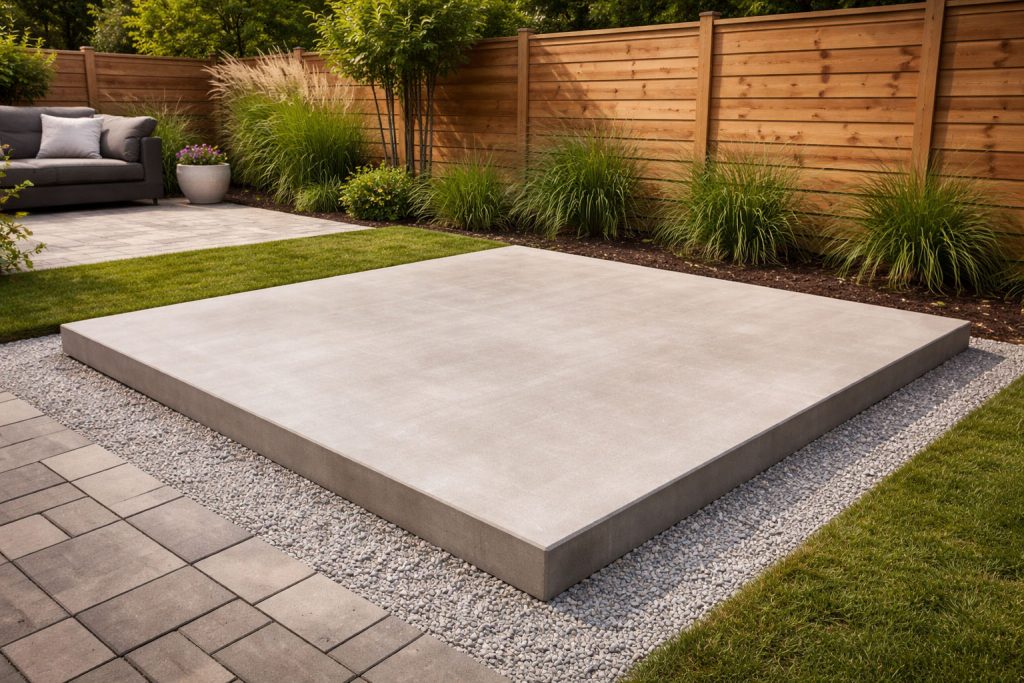
A hot tub can be one of the best additions to a backyard. It gives you a place to relax after a long day, spend time with family, or enjoy a quiet evening outdoors. But before the hot tub arrives, there is one important thing you should get right: the foundation.
A hot tub needs a strong, stable, and level surface. For many homeowners, a concrete pad is a practical choice because it is durable and capable of supporting a heavy load. The challenge is figuring out how much concrete the project will actually require.
This is where a concrete calculator for hot tub pad projects can make the planning process much easier.
Why a Concrete Foundation Is Important for a Hot Tub
A hot tub is much heavier than it appears. The empty unit already has considerable weight, and once you add hundreds of gallons of water and several people, the total load can become substantial.
If the tub sits on an uneven or unstable surface, the weight may not be distributed properly. Over time, this could contribute to movement, settlement, or damage to the foundation.
A properly installed concrete pad creates a firm and level base. It can also make maintenance and access around the hot tub easier, especially when the pad is designed with enough space around the unit.
The foundation should be planned according to the manufacturer’s installation instructions and the conditions at your property.
What Does a Concrete Calculator Do?
A concrete calculator estimates the volume of concrete needed for your slab based on its dimensions.
For a basic rectangular hot tub pad, you generally need three measurements:
- Length
- Width
- Thickness
The calculation is straightforward:
Length × Width × Thickness = Cubic Feet of Concrete
Because concrete is commonly sold by the cubic yard, you then divide the cubic-foot result by 27.
For example, suppose your planned pad is 8 feet by 10 feet and 4 inches thick.
First, convert the thickness:
4 inches ÷ 12 = 0.333 feet
Then calculate:
8 × 10 × 0.333 = approximately 26.64 cubic feet
Finally:
26.64 ÷ 27 = approximately 0.99 cubic yards
So you would need roughly 1 cubic yard of concrete before allowing for waste and other considerations.
This simple calculation shows why a concrete calculator for hot tub pad installations can be useful when preparing a project.
Choosing the Right Pad Size
The concrete pad doesn’t always have to match the exact footprint of the hot tub.
You may want additional space around the unit for steps, access panels, maintenance, or simply a more comfortable appearance. However, the final dimensions should be based on the manufacturer’s recommendations and the available space in your yard.
For example, if your hot tub is 7 feet wide, you might decide to create a larger pad that provides additional space around it. The larger pad increases the amount of concrete required, so accurate measurements become even more important.
Before ordering concrete, mark the proposed pad area on the ground. This makes it easier to visualize the final size and identify any potential obstacles.
How Thick Should a Hot Tub Concrete Pad Be?
Thickness is one of the most important measurements in the concrete calculation.
A common residential slab thickness is around 4 inches, but that doesn’t mean every hot tub installation should automatically use a 4-inch slab.
The correct thickness can depend on:
- The size and weight of the hot tub
- Soil conditions
- Local climate
- Ground preparation
- Reinforcement
- Local building requirements
- Manufacturer specifications
If you are uncertain, check the hot tub installation manual or speak with a qualified professional before pouring the slab.
Increasing the thickness also increases the amount of concrete required. For this reason, you should enter the actual planned thickness into your calculator rather than simply using a standard value.
Preparing the Ground Before Pouring
One of the biggest mistakes homeowners can make is focusing entirely on the concrete while ignoring what’s underneath it.
Concrete needs a stable base. If the soil beneath the slab is loose or contains organic material, the ground may settle over time.
Start by clearing the area and removing grass, roots, and other organic material. Depending on the site, excavation may be necessary to create enough room for the concrete and the supporting base.
The ground should then be properly compacted. A suitable aggregate base may also be installed depending on the soil and local construction practices.
Good drainage should be considered as well. Standing water around the foundation can create problems over time, particularly in areas with heavy rainfall or poor natural drainage.
Do You Need Reinforcement?
Hot tubs place significant loads on their foundations, so reinforcement may be appropriate.
Depending on the project, reinforcement could involve steel reinforcing bars or welded wire reinforcement. The correct approach depends on the slab design and site conditions.
Reinforcement should not be viewed as a replacement for proper soil preparation. Both the subgrade and concrete slab need to be designed appropriately.
For larger hot tubs, unusual ground conditions, or complicated installations, professional advice is recommended.
Calculating Extra Concrete
When using a concrete calculator for hot tub pad, you may get a very precise number based on the dimensions you enter. However, real construction projects aren’t always perfectly precise.
The excavation may not be completely uniform. Some concrete can also be lost during transportation, placement, and finishing.
For that reason, contractors often account for a small amount of additional material rather than ordering exactly the calculated volume.
The amount of extra concrete you need depends on the project and supplier. Ask your ready-mix supplier or contractor how much allowance they recommend.
Ordering excessive concrete isn’t ideal either because unused ready-mix cannot simply be stored for another day.
What If Your Hot Tub Pad Is Circular?
Some hot tubs and surrounding designs require a circular pad instead of a rectangular one.
For a circular slab, you can calculate the volume using:
π × radius × radius × thickness
The radius is half the diameter of the circle.
For example, if a circular pad has a diameter of 10 feet, the radius is 5 feet. You can then multiply the area by the planned slab thickness to determine the volume.
For irregularly shaped pads, breaking the design into simpler sections can make the calculation easier.
An online calculator can save time when dealing with these shapes.
Concrete Finish Matters Too
Once the concrete has been poured, the surface needs to be finished properly.
A hot tub pad should be level enough to meet the manufacturer’s requirements. The surface should also be finished appropriately for its intended use.
Think about the surrounding area as well. A smooth concrete surface may look clean and modern, but you may want a texture that provides better traction around an outdoor hot tub.
You should also consider how rainwater will move around the pad. The exact drainage approach should be planned without compromising the level requirements of the hot tub itself.
Common Planning Mistakes
Before starting your project, watch out for these common mistakes:
Not checking the hot tub specifications: Every model can have different installation requirements.
Calculating only the empty tub’s weight: Water and occupants add a significant amount of weight.
Measuring only once: Double-check your dimensions before ordering concrete.
Ignoring the soil: A strong slab still needs a stable foundation underneath.
Making the pad too small: Allow space for access and equipment where appropriate.
Ordering exactly the calculated amount: Discuss an appropriate allowance with your supplier.
Forgetting local requirements: Some areas may have specific rules for concrete work or hot tub installations.
Final Thoughts
Building a concrete pad for a hot tub doesn’t have to be complicated, but it does require careful planning. Getting the dimensions right is one of the first steps, and a concrete calculator for hot tub pad projects can quickly turn those measurements into a practical estimate.
Measure the length, width, and thickness of the planned slab, calculate the volume, and convert the result to cubic yards when necessary. Then consider the ground conditions, drainage, reinforcement, and manufacturer’s requirements before moving forward.
Most importantly, don’t rush the foundation simply because you’re excited to get the hot tub installed. A properly prepared base can make a major difference in the long-term stability and performance of the installation.
With accurate measurements and proper preparation, you can create a solid foundation that allows you to enjoy your hot tub comfortably and confidently for years to come.