Handheld Thermal Monocular with 1000m Detection Distance: Features and Benefits
When visibility is limited by darkness, fog, or changing outdoor conditions, thermal imaging can provide a valuable advantage. A handheld thermal monocular 1000m detection distance is designed to help users identify heat signatures from considerable distances while remaining compact and portable. These devices are useful for outdoor handheld thermal monocular 1000m detection distance observation, wildlife monitoring, property awareness, navigation, and other situations where dependable visibility is important.
With modern thermal technology, users can detect differences in temperature rather than relying entirely on visible light. This makes a thermal monocular particularly useful when conventional optical equipment becomes less effective.
What Is a Handheld Thermal Monocular?
A handheld thermal monocular is a compact thermal imaging device designed for viewing heat signatures through a single eyepiece. Instead of producing an image based only on reflected visible light, it detects infrared radiation emitted by objects and converts temperature differences into a visible thermal image.
The term handheld thermal monocular 1000m detection distance refers to a portable thermal viewer designed with a detection range of up to approximately 1,000 meters under suitable conditions. Actual performance can vary depending on the size and temperature of the target, weather conditions, terrain, sensor quality, and atmospheric conditions.
For outdoor enthusiasts, a handheld design offers convenience because the device can be carried easily and used whenever additional visibility is needed.
1000m Detection Distance and Why It Matters
A 1000-meter detection distance can provide useful long-range awareness in open environments. Rather than depending on bright ambient lighting, thermal imaging can reveal the presence of warm objects against a cooler background.
This capability can be especially helpful across fields, woodland edges, trails, and other outdoor areas where visibility may be reduced. However, detection distance should not be confused with identification distance. A device may detect a heat source at a long range while providing enough detail to identify exactly what that object is only at a shorter distance.
For this reason, users should consider the complete specification of a thermal monocular instead of focusing on detection distance alone.
Key Features to Look For
Thermal Sensor Performance
The thermal sensor is one of the most important components of a thermal monocular. A capable sensor can provide clearer separation between objects with different temperatures, helping users understand the thermal scene more effectively.
Higher-quality thermal sensors generally offer better image detail and can make it easier to recognize heat signatures in changing outdoor conditions.
Clear Thermal Display
A good display should present thermal information clearly without making the device difficult to use. Image clarity is particularly important during extended observation because users need to distinguish differences between the background and detected heat sources.
Many modern thermal monoculars offer different viewing modes or image presentation options to make thermal contrasts easier to understand.
Compact and Portable Design
Portability is a major advantage of a handheld thermal monocular. A compact design makes it easier to carry during hiking, wildlife observation, camping, outdoor inspection, or property monitoring.
The device should also be comfortable to hold handheld thermal monocular and operate. Simple controls can make it easier to adjust settings while keeping attention focused on the surrounding environment.
Rechargeable Battery
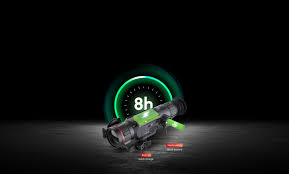
Battery life is another important consideration for outdoor equipment. A rechargeable battery can make a thermal monocular convenient for repeated use, particularly when spending several hours outdoors.
Users should check the expected operating time and charging method before choosing a model. Carrying a suitable power solution can also be useful for longer outdoor trips.
Benefits of Thermal Imaging
Effective in Low-Light Conditions
One of the biggest advantages of thermal imaging is that it does not depend on visible light in the same way as traditional optical viewing. This means thermal equipment can remain useful during nighttime and other low-light situations.
The ability to detect heat differences can provide additional awareness when ordinary vision or conventional optical devices have limitations.
Useful in Changing Weather
Thermal imaging can continue to provide useful information in certain conditions where visible-light observation becomes challenging. Light fog, shadows, and low illumination may affect ordinary viewing, while thermal imaging can still reveal temperature differences.
Performance will still depend on environmental conditions, so users should understand that thermal technology is not completely unaffected by weather.
Improved Outdoor Awareness
A handheld thermal monocular 1000m detection distance can help users monitor larger areas without carrying bulky equipment. The ability to scan surroundings for heat signatures can provide additional awareness during outdoor activities.
For wildlife enthusiasts, thermal imaging can also help locate animals based on their natural heat signatures while minimizing the need for bright illumination.
Applications for Outdoor Users
Thermal monoculars have a wide range of practical applications. Outdoor enthusiasts may use them for wildlife observation, hiking, camping, nature studies, and general nighttime awareness.
They can also be useful for checking large outdoor areas where visibility is limited. Depending on the product’s specifications and intended purpose, thermal imaging equipment may support professional inspection and observation tasks as well.
When selecting equipment from Guide Outdoor, users should consider the intended application, environmental conditions, required detection distance, sensor specifications, display quality, and battery performance.
Choosing the Right Thermal Monocular
A 1000-meter detection specification can be attractive, but it should be evaluated alongside other technical characteristics. Resolution, thermal sensitivity, lens configuration, refresh rate, field of view, battery life, weight, and durability can all influence the overall experience.
A wider field of view may be helpful for scanning nearby surroundings, while a suitable lens configuration can support observation at greater distances. A lightweight body may be preferable for users who plan to carry the device during long outdoor activities.
It is also important to choose equipment designed for the conditions in which it will be used. Weather resistance, construction quality, control layout, and operating temperature range may all matter for outdoor applications.
Responsible Use of Thermal Imaging
Thermal imaging technology should always be used responsibly and in accordance with local laws and property rules. Users should respect privacy and avoid using observation equipment in ways that interfere with other people’s rights.
The purpose of a thermal monocular is to improve environmental awareness and observation. Understanding the device’s limitations is equally important. A thermal image shows differences in heat and does not necessarily provide the same visual detail as a standard optical image.
Final Thoughts
A handheld thermal monocular 1000m detection distance can be a practical addition to outdoor equipment for users who need enhanced visibility and long-range thermal detection. Its combination of portability, thermal sensing, low-light capability, and extended detection range can make it useful across a variety of outdoor situations.
When choosing a thermal monocular from Guide Outdoor, look beyond the advertised detection distance. Sensor quality, image clarity, battery life, portability, durability, field of view, and intended use all contribute to the device’s overall performance. By comparing these features carefully, outdoor users can select thermal imaging equipment that matches their needs and provides dependable observation in challenging lighting conditions.